Image
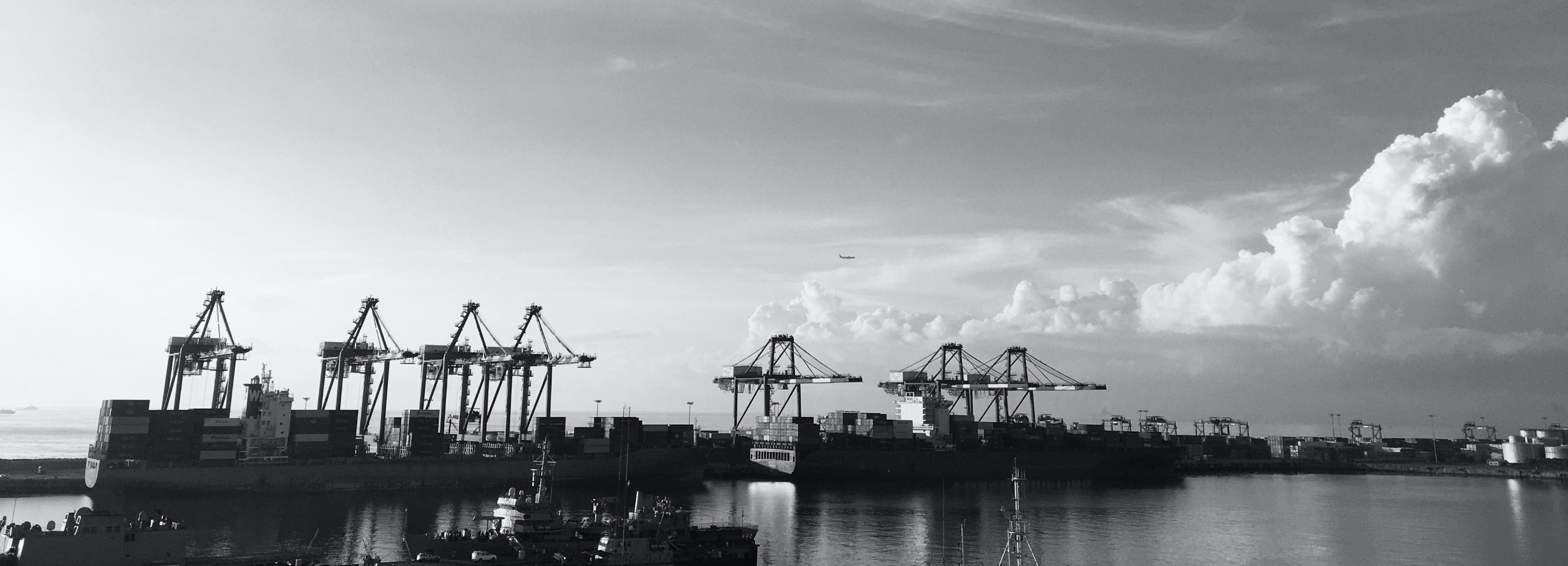
100 days on, despite repeated moments of hope for de-escalation, the war has resumed and intensified – extending the suffering and exposing transport workers to renewed and unacceptable risks.
From day one, the ITF has unequivocally said that transport workers are not combatants. They are civilian workers – seafarers, pilots, cabin crew, ground handlers, air traffic controllers, truck drivers, port workers – who keep the world moving. They have no stake in this conflict. They have no power to stop it. But they continue, day after day, to absorb its consequences. And we will not allow the world to look away from what is being done to them.
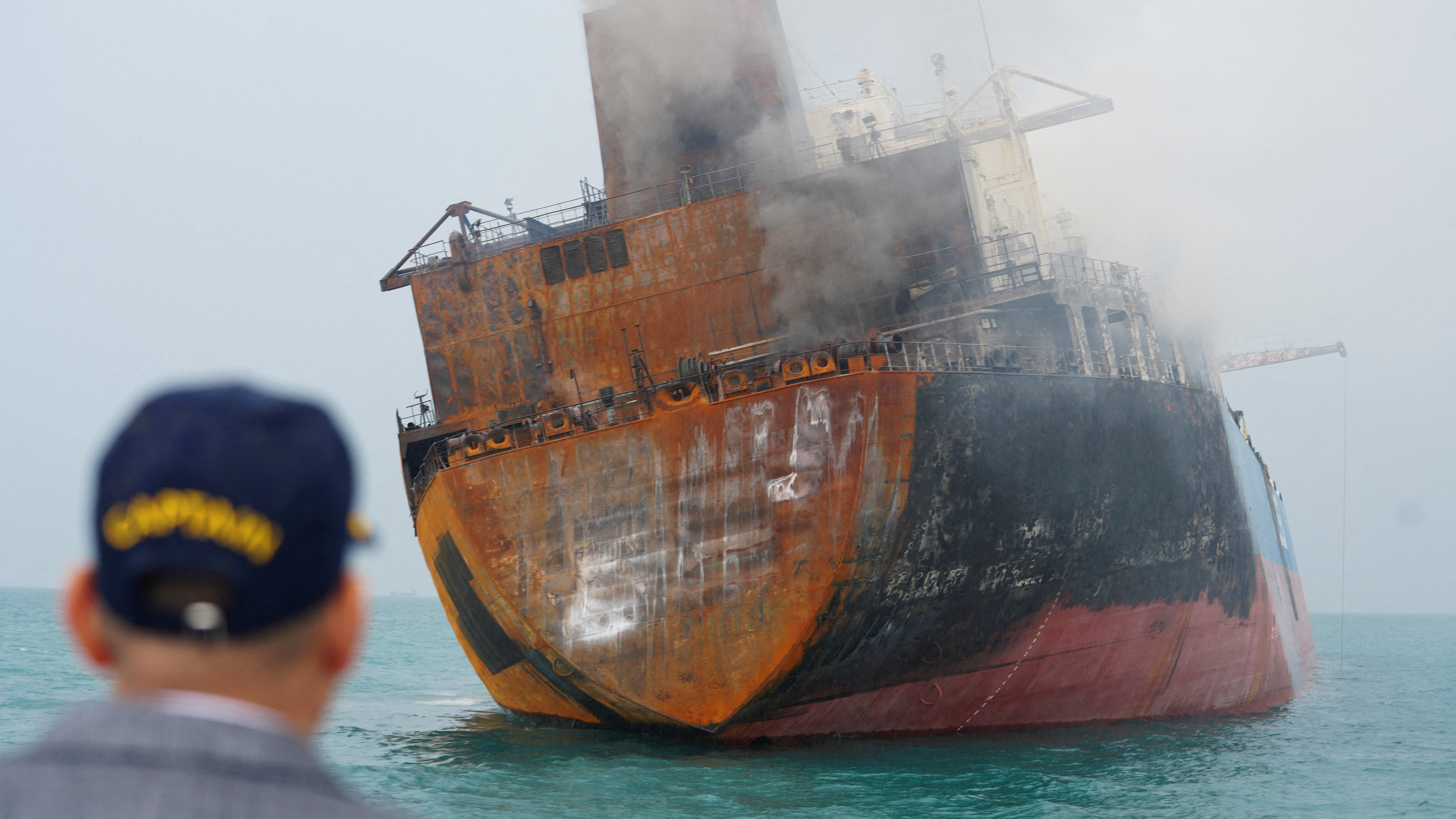
As we mark this moment, the attacks on civilian transport workers have not stopped. In recent days, strikes on Kuwait International Airport and Bahrain International Airport have again claimed an innocent civilian life and put aviation workers in the line of fire. In the Persian Gulf, ships continue to be targeted. The most recent wave of attacks and seizures of civilian vessels near the Strait of Hormuz is not a departure from what has come before – it is the continuation of a pattern that has been playing out for one hundred days. Civilian workers are being deliberately placed in danger, and those responsible know exactly what they are doing.
In the first hours of this conflict, schools, airports and ports across the conflict region came under attack resulting in hundreds of civilian workers being killed and injured. Workers were injured at Kuwait International Airport, at Bahrain International Airport, at Dubai International Airport, at Zayed International Airport. One person was killed at Zayed. These are not military targets, they are civilian workplaces. The people inside them were doing their jobs: checking in flights, directing aircraft, loading cargo, serving passengers. Aviation workers showed up for work and found themselves in a war zone.
In the days and weeks that followed, the attacks on civilian shipping intensified. Ships were struck near the Strait of Hormuz and across the Persian Gulf. Vessels have been seized by Iran and the United States. Seafarers have been killed. Seafarers have been injured. And seafarers are being held hostage.
And beyond the attacks themselves, transport workers across the region – including trucks drivers carrying goods through conflict corridors, crossing closed borders, navigating disrupted routes –have faced the daily reality of a war economy: danger, impossible conditions, and in too many cases, no protection at all.
More than 20,000 seafarers remain stranded in the Persian Gulf. These seafarers are overwhelmingly from the Global South, far from their families, with no certainty about when they will see home again. In some cases, they are running low on fuel, water and food. They watch missiles and drones in the skies above them, they sleep, if they’re able to, knowing they are in a warzone. Since the war began, the ITF has received over 2,500 requests for assistance from seafarers and their families and assisted more than 600 seafarers to get home.
The mental health consequences are profound, and they are not being adequately acknowledged. Sustained fear. Isolation. Uncertainty. Separation from family. These are not abstract harms – they are serious, documented psychological injuries that will outlast this conflict for many of the workers caught in it. Some employers have made this worse, seeking to use the war as cover: invoking force majeure to extend contracts without consent, restricting or cutting communications, denying repatriation.
War must not be a blank cheque for employers to strip seafarers of their rights. The Maritime Labour Convention (MLC) exists precisely to prevent this. Full implementation – now, not when the conflict is convenient – is non-negotiable. Crew changes must happen. Contracts must be honoured. Every seafarer in this region must be able to contact their family without restriction. Proposals for a humanitarian maritime corridor to restore flows through the Strait of Hormuz have attracted growing attention. The ITF understands the urgency, but we are unequivocal on one point: any such corridor can only operate if there is a full, binding, verified guarantee from every party to this conflict that participating vessels and their crews will not be targeted.
Civil aviation workers have been carrying an impossible burden since day one. They kept airports operating under the threat of attack. They ran evacuation flights. They managed the cascading disruption of closed airspace, rerouted flights and maximum operational uncertainty. The knock-on effects extend worldwide: flight crews facing longer routes and extended duty times, ground staff and air traffic controllers managing complex operational chaos. This is a global aviation workforce absorbing a global shock. The ITF said from the outset that civilian aviation infrastructure and must never be military targets. That principle has been violated. Workers at Kuwait International Airport and Bahrain International Airport are the latest to pay the ultimate price.
For one hundred days transport workers have been killed, injured, detained, traumatised and stranded while continuing to carry passengers, cargo and essential goods on which the world depends.
Our demands remain unchanged:
For 100 days, governments have issued statements, militaries have exchanged fire, and political leaders have defended their positions.
Transport workers have carried the cost.
The ITF represents more than 16.5 million transport workers worldwide and our message is clear: Transport workers are not expendable. They are not collateral damage. They are not bargaining chips. They are not instruments of war. End this war, protect civilian transport workers, and bring stranded and detained transport workers home.
Until that happens, the ITF will continue to speak out, organise and fight for every transport worker trapped in the shadow of this conflict.